


Courtesy of SWC
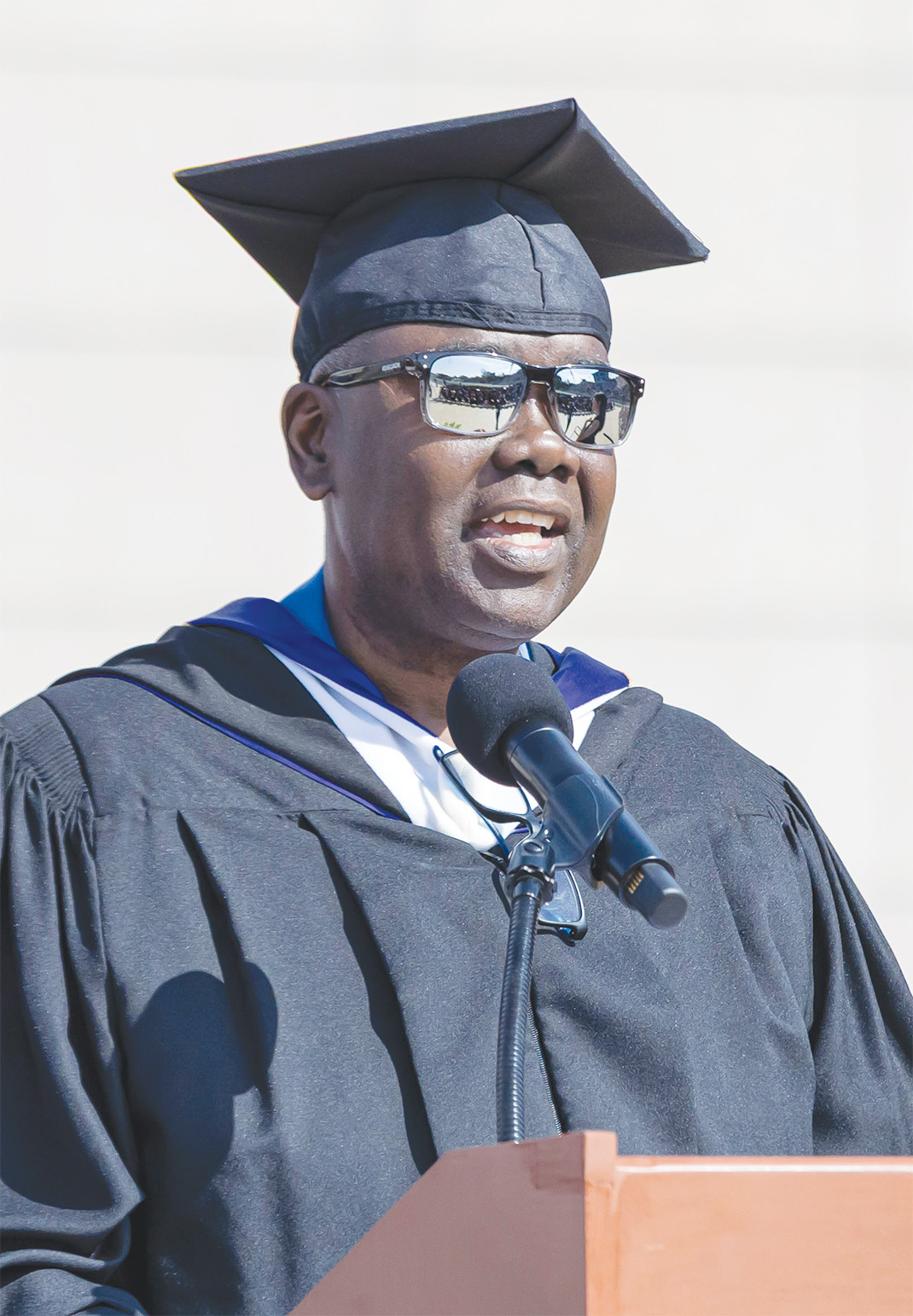
ADVOCATING FOR BLACK MEN—McCormick is working to bring attention to medical inequalities faced by African Americans.
By Ines Cervantes
Jerry McCormick was on a roll. He had a great new job, founded a new student journalism foundation and was recently presented with Southwestern College’s highest honor.
Then cancer sneaked into his life like a mugger in a dark alley.
McCormick, founder of the San Diego Association of Black Journalists, was presented SWC’s Honorary Degree last May in part because he has relentlessly fought long odds and discrimination during his celebrated career in print and broadcast journalism.
Prostate cancer, he learned, is indiscriminate but the American medical system retains vestiges
of its anti-Black past.
“My new mission in life is to get Black men like me to get regular check ups for prostate cancer,” he said. “Turns out we are often misdiagnosed or diagnosed too late.”
McCormick was almost one
of them.
“This has turned my whole world upside down for the better,” he said. “I’m trying to use my voice to shout out to the universe (for) Black men especially to get tested because I literally found this out by accident.”
Dr. Trishana Norquist, a Southwestern College professor of biology, said McCormick is right. American men in general, and Black men in particular, have little understanding of prostate cancer and its symptoms.
“The prostate isn’t the only part of the body that is impacted,” she said. “It impacts your ability to ejaculate and urinate and have an erection,” she said. “There can be pelvic pain. The physical impact is due to the way it’s connected (to other parts of the pelvic area). Men can have sperm mixing with urine, blood in urine or in the sperm.”
Men who notice those symptoms should seek medical advice, she said.
Cancer patients can also suffer emotionally, said Ana Gubach, who serves as a caretaker for a family member.
“The things you may have to do in a doctor’s appointment can be embarrassing,” she said. “Your body may be exposed and this is difficult especially for people who are more reserved. Having your adult children taking care of you (and perhaps) undressing you can have a huge emotional impact.”
It was sometime during the summer when McCormick started noticing issues with his bladder, he said. He decided to go to the doctor to get checked out and got the bad news.
“It was recommended that I get a prostate specific antigen test and the results came back pretty high,” he said. “I got an MRI a couple weeks after I had my biopsy done. I was out of town in Las Vegas for a concert when I got the email from LabCorp that said I had prostate cancer. I went completely numb.”
McCormick had surgery in January and the prognosis is encouraging, but he is still dealing with discomfort that is preventing him from being his almost legendarily energetic self.
“I’m used to doing things,” he said. “This is a setback and I’m going about things more gingerly, but I am optimistic.”
McCormick said he was one of the lucky ones. Black men in America are often mistrustful of the medical industry in the wake of the notorious “Tuskegee Experiment” that secretly infected Black men with syphilis from 1932 to 1972. SWC Assistant Professor of African American Studies Dr. Brother Shabbaz said Black men are still victimized by disproven racist stereotypes.
“Medicine has been weaponized against Black people,” he said. “(Doctors fail) to medicate because of the belief that Black people have a higher pain tolerance. This idea is deeply rooted in slavery and has spilled over into the medical industry. We saw it with the Tuskegee Experiment.”
McCormick said he wants to help elucidate Black American men through his own personal experience that it is essential to seek medical care. He recently had an op/ed piece on the subject in the San Diego Union-Tribune.
“I want to educate as many Black men as I can,” he said. “I have been using every platform I can find, writing a Substack and being vulnerable. Right now I am trying to form a support group for Black men (in conjunction) with UCSD Medical Center.”
Besides founding SDABJ, McCormick is a co-founder of the National Association of Black Journalists and is revered across America by people of color in the news media. He is the Founder of Pro for a Day, the 23-year-old all-day bootcamp/workshop for college journalism students hosted at Southwestern College. McCormick is also the founder of the 4-M Minority Journalism Foundation. He has taught journalism at SDSU and SWC, though he is now dedicated full-time to his position as Communications Director at CSU San Marcos.
NBC7 News Anchor Omari Fleming said McCormick is a friend and mentor. He is the current president of SDABJ and Chairperson of Pro for a Day.
“It hurts to see somebody who has given so much to the community and to journalism have to take a step back,” he said. “Following Jerry is tough, replacing him is impossible.”
The San Diego Press Club presented McCormick with its top honor, the Terry Williams Directors Award for his “courage and integrity as a groundbreaking journalist.” Bonitafest selected McCormick for its Pioneer Award for “creating a space for journalists of color in our region and empowering legions of journalism students.” McCormick will be honored in May with the San Diego State University Barbara Hartung Journalism Award as “a journalism icon in San Diego County.”
“That is very nice and I am looking forward to attending,”
he said. “I am also looking forward to resuming some of
the things I was doing before I was diagnosed. Where there is life, there is hope, right? I’m ready to get healed up and get
on with my life.”


