


Ines Cervantes / The SWC Sun
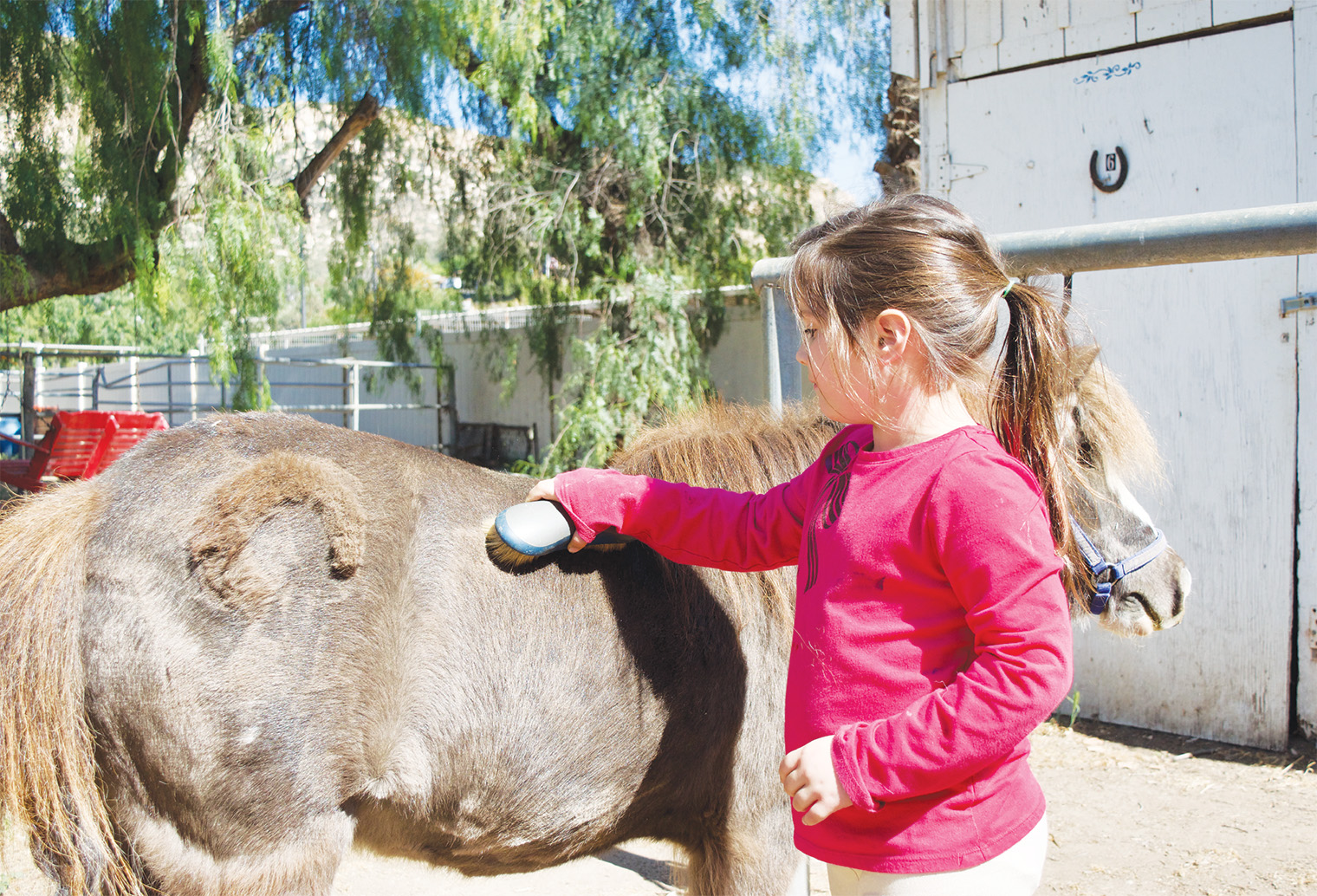
BRUSH WITH SUCCESS—A miniature horse at TLC Ranch is part of a team of exceptionally well-trained service animals.
Service dogs are a common sight in the community and periodically seen on campus. They are friendly as that nice lady in the cafeteria and smart enough to earn scholarships in calculus. They are officially approved in Southwestern College governance policy to cruise around campus and attend classes with students.
Caring canines have company. Miniature horses are also district-approved service animals. A governing board vote cleared the way for well-equipped equines to roam the halls, classrooms and labs – within certain guidelines, of course.
Before students get too excited and saddle up one of the little ponies (average height 38 inches, typical weight 1,000 pounds) there are several steps to take. Therapy horses, it turns out, have to have their own pedigrees and academic degrees.
Chief of Staff Dr. Zaneta Encarnacion said miniature horses are allowed on campus to help students if they follow the laws of the Americans with Disability Act and are assigned to students professionally diagnosed with physical, sensory, psychiatric, intellectual or other types of mental disabilities.
“There are four specific assessments written in law that we have to abide by,” she said. “The student has to have control of the horse and make sure the horse’s presence doesn’t compromise any safety concerns.”
Service animals are allowed on campus, Encarnacion said, but most emotional support and therapy animals are not. Emotional support animals include a broad array of critters, but snakes, lizards, hamsters, pot belly pigs and tarantulas need to stay home.
Horses, however, have a long and storied heritage as therapy service animals. Tammy Collins, executive director of Circle TLC Ranch, said horses can be magical for people who rely on them for therapy and support.
“Our horses are the therapists,” she said. “They are the ones who show up and are present. They take on anxieties and carry secrets. People are able to share with these horses what they are feeling. Our horses are part of an amazing healing process.”
Prospective service animals like miniature horses have to undergo rigorous training. They start out as foals and learn over the course of a year. Reproductive biologist Andrea Cabibi, a trainer at Taxonyx, said miniature horses training as a service animal are smart, focused and calm.
“Producing a really steady horse is the primary focus of the training,” she said. “That takes a very long time. The younger you start the better. We introduce the horses to multiple situations with different people so the animal does not become too attached to one person and getting them used to working with different people.”
Cabibi said even though service horses are trained to be around people, Southwestern College students who encounter any service animal need to remember that they are a working animal, not a pet. Encarnacion agreed.
“It might be a little jarring for some people to see, but these animals are professionals,” she said. “They are trained, meet all of the qualifications and have a job to do. We would have to probably train everyone else to not touch them and let the horse do its job.”
Cabibi said miniature horses have biological staying power that, sadly, dogs lack.
“A service horse will live 30 to 35 years,” she said. “A dog will only be able to be functional for nine years. (As it ages) a dog might not be able to do its duties as a service dog. (People) often get at least 30 years out of a service horse, which is a huge advantage.”
Southwestern College has not ever had a student with a service horse, but the day may come when a mini horse makes a big mark.
“The outside of a horse is good for the inside of a man,” said Winston Churchill.
Perhaps someday a horse can be good for the inside of a classroom.


