


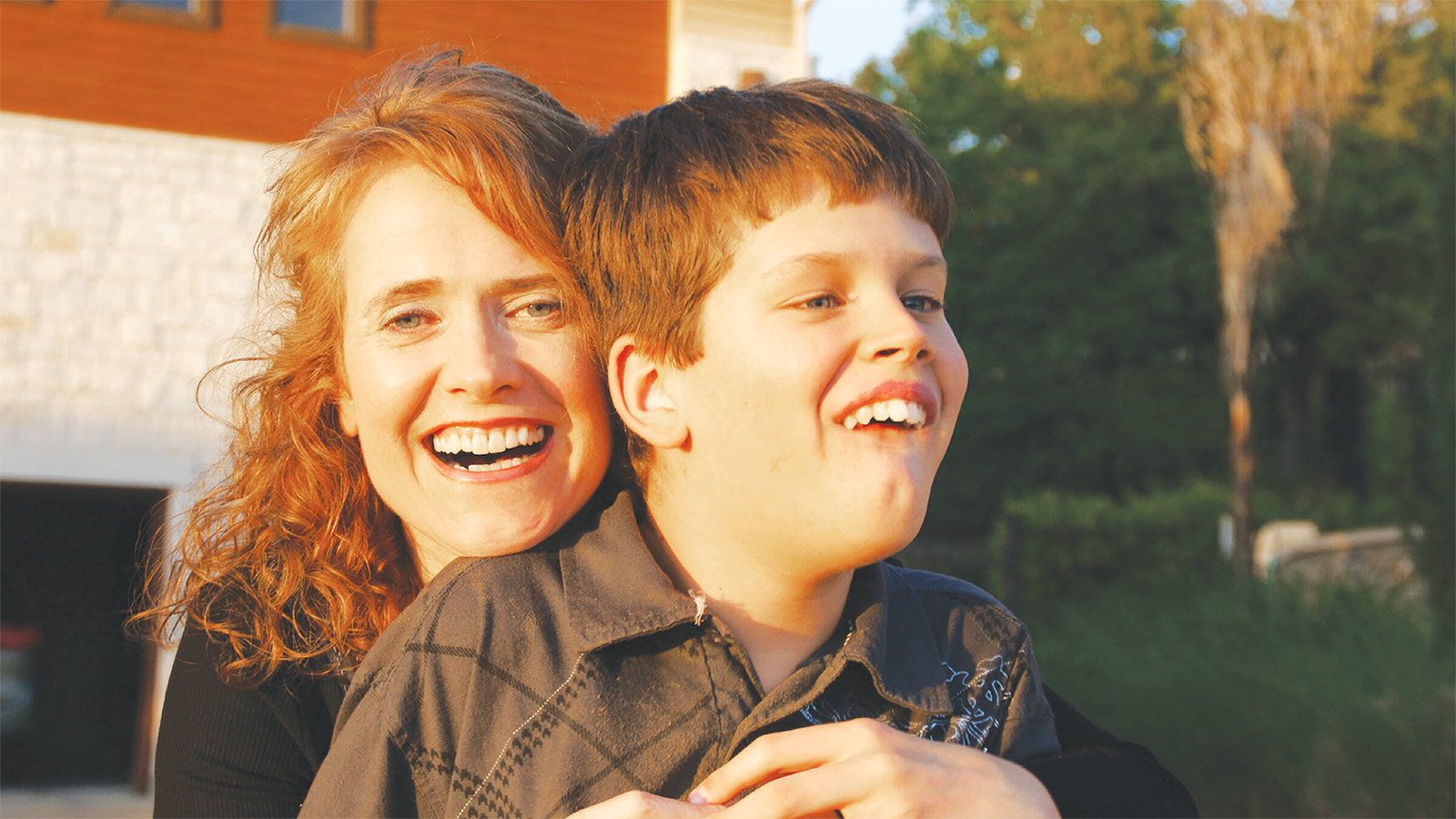
Courtesy Netflix
By Alfonso Julián Camacho
A Perspective
An Icelandic family once travelled to Texas with a nonspeaking boy like me. A documentary about their journey aired on TV. My mother sat transfixed on the floor of our living room, watching the documentary that would change my life.
“A Mother’s Courage” showed the nonspeaking boy just as he was, replete with his sensory differences, emotional outbursts and communication challenges. My mother saw me in him. She saw his victories as someday being mine.
What the news and entertainment media says about us matters. What they do not say also matters. When we see someone like us on the screen, we also need to see the context. Where and how disabled people are shown also matters.
Growing up I rarely caught glimpses of people like me in documentaries or news reports. Each appearance was a rare gem that helped me to understand myself. I never saw myself represented in the entertainment media. People with disabilities – especially those easily-seen disabilities– seldom appear on screen. Their absence deprives us of the opportunity to grow and empathize with their human experience.
Underrepresentation of the disabled is chronic. Disabled people are between 14-30 percent of the U.S. population, but just 1.8 percent of characters on TV. Out of sight, out of mind. When we do not see categories of people in a space, it is easy to believe they do not belong there. When we do not see disabled people in the entertainment media, it is easy to perceive them as abnormal when we do see them.
My experience is informative. I regularly walk into rooms where no one has ever seen someone like me. I get side glances and bewildered stares. I must explain my reason for being there or risk being seen as a babysat human accompanying someone who matters.
At school I enjoy raising my hand and participating in classes, which often surprises classmates. They probably see
a flapping, bolting mute man
in college. I perceive myself
as a young adult in college.
At least college is a safe space. In other spaces curiosity and misunderstanding can morph into judgment and violence.
A police officer killed someone like me inside a Costco. The autistic man bolted and accidentally pushed the officer, who pulled his gun and shot him to death.
My college peers and police officers never had the opportunity to see someone like me on TV or in films. Absence keeps us mysterious and misunderstood. They say absence makes the heart grow fonder, but for autistic people absence from the media can lead to death. We fear or dislike what we do not know.
People with good intentions may resort to prayers, provide unsolicited help, describe us as suffering or praise parents of disabled children as heroes for loving their kids. The subtle “other” language nudges us off the road of inclusion. Those kinds of benevolent but hurtful actions devalue the lives of the disabled.
Disabled people are chronically undervalued. This has dire consequences. During the pandemic, disabled people were on the wrong end of medical rationing and Do Not Resuscitate orders. Prayers and pity imply that we are broken. Prayers are appreciated but keep the pity. My life is different, not tragic.
As recently as 1974 the U.S. had “Ugly Laws” that prevented the disabled, maimed and deformed from going outside. The last of these laws was repealed about 50 years ago, but American advertisers never got the memo. Beauty standards squash most disabled people. Branding encourages consumers to aspire and pushes aside the rest. Disabled people prefer media that includes them. It is good business. Disabled Americans spend a sizable percentage of the nation’s money.
In absence there is opportunity. Nature hates a vacuum and an untapped market awaits. Disabled people want to be part of the American tapestry. Meaningful representation requires a conscious effort by corporations, government and nonprofits to hire disabled people – the real experts in the disabled community. Perhaps they would help to end the stereotypes of disabled people as tragic, superhuman or saintly. We need room for the more “typical crip” to be represented, including the sleepy teenager, the punk rocker, the sexually active, the gender different, the normal human.
People with visible disabilities get less than 1 percent of screen time across all platforms. When I was invited to speak on a panel at Comic Con about the Augmented and Alternative Communication I use, I took a deep dive to search for characters who communicate as I do. It was slim pickin’s. Rare examples were inauthentic, evil or “cured.”
Organizations like The Autism Scene, a non-profit dedicated to promoting the inclusion of explicitly autistic characters in children’s pop culture, are prodding change by offering awards for scripts that feature autistic characters. At Southwestern College, I see the efforts made to create inclusive visual materials. Posters feature people of all ethnicities but could do a better job including people with disabilities.
Changing the media starts with us. I published my first illustrated children’s book
about an autistic child determined to attend school. It is a crystalline drop in the disabled media bucket. We need to make it rain.
My mother’s face glowed in awe when she saw the TV documentary about a little boy learning to communicate by spelling on a letterboard. She had been told that it could not be done, but she knew I could learn to do that, too. My parents and I flew to Texas. The same woman in the documentary opened the door to her classroom and opened my thoughts to the world.
I can write this column because, once upon a time, an Icelandic mother thought her family’s journey was worth sharing in the mass media. She organically documented her family as it was, sans heroism or tragedy. Her determination changed my life. Imagine how many lives could be changed if we could all see someone like me on TV.


