


Photo Courtesy of Envato
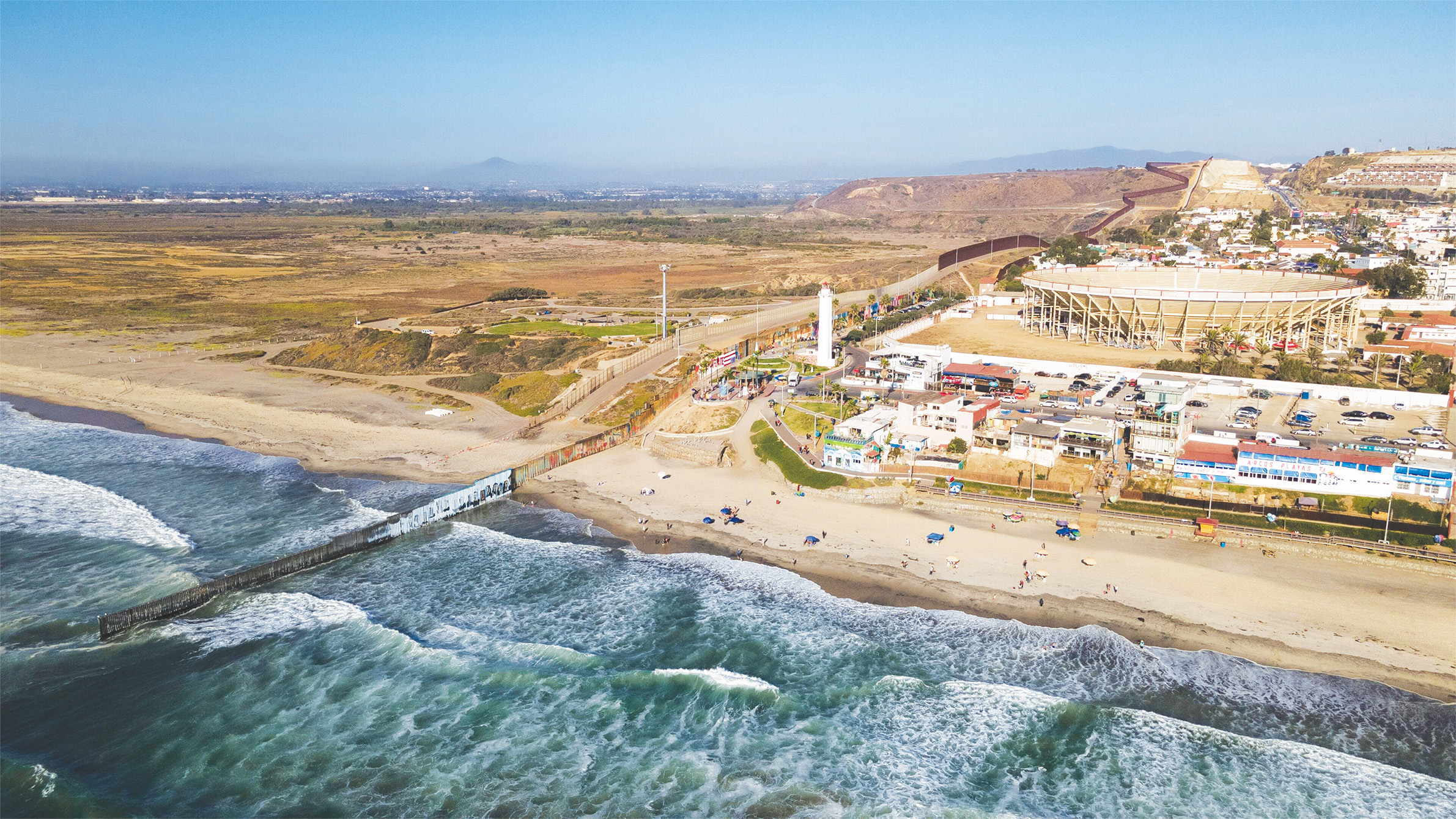
BORDERING ON CHAOS, OPPORTUNITY—San Diego and Tijuana share a border but also an interconnected society with two distinct governments with environmental, socio-economic and law enforcement challenges that will require bold thinking.
By Sebastian Salgado
TIJUANA—A team of nearly 80 Ivy league architecture graduate students traveled to the borderlands to learn about Tijuana’s buildings, environmental issues and watershed. Their expert teachers were 15 Southwestern College undergrads.
Students and faculty from Columbia University in New York City joined forces with 15 architecture students from Southwestern College, legendary USD architecture professor Teddy Cruz, SWC/Columbia alumna Vicky Sindac and SWC Dean Dr. Arredondo, a former professor of architecture. Their forays into Baja California were “mind blowing” for the New Yorkers, said Columbia University Assistant Professor Grazyna Kubis.
“I think it was an eye-opening experience for Columbia University students to study this region,” Kubis said. “They were not expecting to find the sorts of issues we experienced.”
Besides architectural differences and the use of other kinds of building supplies, Columbia University students were surprised by the epic international sewage problems facing the United States and Mexico. Sindac said she was glad to see academics from other parts of America experience the wonders and challenges of the San Diego-Tijuana metroplex.
“This was a very beneficial experience for everyone involved,” she said.
Arredondo agreed.
“We were so happy to host these talented students and faculty from Columbia University,” she said. “I think everybody learned a great deal from each other.”
Since the Treaty of Guadalupe Hidalgo in 1848 drew the existing Mexico-United States border, Indigenous People, environmentalists and social planners have gazed at the borderlands of the Southwest, said SWC architecture student Yordi Calleja.
“At the end of the day the Earth is where we all live and we have to make sure we take care of it,” he said. “Just because a border separates two nations, the land and the environment are one.”
SWC Professor of Architecture Eric Johnson agreed.
“Columbia University students and Southwestern College students now understand the potency of these border area issues because they made the effort to explore the region and contemplate the impact of people on the landscape,” he said. “Perhaps they will all feel empowered to help improve the situation.”
Columbia University students also traveled to Mexico City to study the magnificent architecture of the nation’s capital and its imposing environmental challenges. They later gave a zoom presentation to the Southwestern team to share their findings.
Southwestern College, under the leadership of Arredondo, has become a community college architecture powerhouse. If Arredondo has her way, architecture will soon be a Bachelor’s degree program. The proposal, called Transborder Environmental Design (TED), is unique and needed, she said.
“Students will work on earning their architecture degree for transfer, then submit a formal application as if applying to a new college,” she said. “Successful applicants will still be taking classes at Southwestern College, only now for a Bachelor’s degree.”
Arredondo has worked as the interim Dean of the School of Arts, Communication, Design and Media this academic year, but said she hopes to spend more time and energy on the TED proposal in the coming months.
“There is definitely a need for a new kind of architecture curriculum here near the border,” she said. “Southwestern College is the perfect institution to host it.”


