



Carlos A. Luna / The SWC Sun
Stepping Into the Past—Matthew Padrigan and Gemma Cabato Padrigan perform Singkil as Prince Bantugan and Princess Gandingan. The dancers interweave stories of courtship and royalty as they retell the legend of the Darangen.
A local dance company based in National City has been celebrating Filipino dance and culture for half a century.
The PASACAT Philippine Performing Arts Company hosted their 50th Annual Extravaganza show Balik-Tanaw at Joan B. Kroc Theatre. The event has become an annual showcase of Filipino heritage.
“I hope when [audiences] see our production they realize the beauty and intricacies of the cultures we have in the Philippines,” said Cultural Director Matthew Padrigan. “These communities exist. These people are still here.”
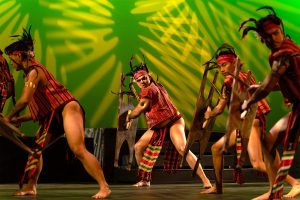 On Oct. 3, a cast of 41 performed traditional dances from the Philippines to a story about remembering ancestral lineages and the legacies of indigenous folk. Through song and dance, PASACAT invited audiences to join them through a voyage to the past.
Delfin Labao founded PASACAT in 1970, being the first recognized Philippine dance company in San Diego. For 56 years, PASACAT hosted dance concerts, festivals, and international tours. Extravaganza was the first show that set them on the map at the Organ Pavilion in Balboa Park on September 7, 1969.
As much as audiences enjoyed the show, the cast who have been practicing since June 2026 were even more ecstatic to put on the performance.
Padrigan joined PASACAT in 2002. Padrigan preserves identities that transcend a continental distance through cultural mapping with the National Commission for Culture and the Arts. Stories that will never be lost at the cultivation of sayaw—dance.
“There’s so many different faces of being Filipino,” he said. “Faces in the Philippines and faces in the U.S. But what runs in our blood is the same. We can still be united. We can still be one,” Padrigan proclaimed.
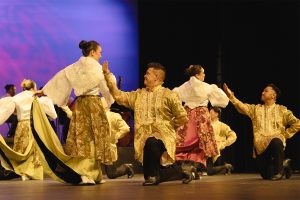 PASACAT holds weekly practices in their studio in National City. Traditional Filipino percussion and string instruments sit adjacent to the dance floor. Sounds of the kulintang and bandurria echo off the wall. A plethora of colors shine through the storage room—PASACAT’s wardrobe of cultural attire acquired since 1970.
Joji Castro, the dance director, leads practices every Saturday with the entire cast. Extravaganza features dances from the Kalinga people, Maria Clara suite (courtship dances with Spanish influence), dances from the South symbolizing nobility from the Maranao people, dances from the countryside symbolizing fiestas and daily work in rural Philippines, and the piece “Oath of the Tahaw” adapted from the T’boli people.
After dancing in the Bayanihan Philippine Folk Dance Company, the Philippines’ oldest and official national folk dance company, Castro joined PASACAT to direct in 1986.
“Not everyone has a chance to go to the Philippines,” she said. “I can take you to Luzon, Visayas, and Mindanao. I can show you the Philippines through folk music and dance.”
During rehearsal, the Sayaw 2 (ages 14-20), Senior (ages 21-42) and Alumni (ages 44-50) cast practice as if they were performing for a live audience. Castro does not hesitate to run a dance twice if she does not deem it sufficient. Universally, there is a high degree of respect for her direction and strong desire to commit to the craft.
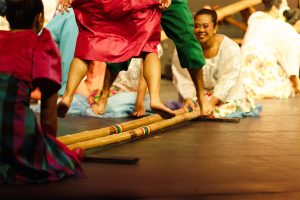 Don Divinagracia Jr., a Sayaw 2 dancer, joined PASACAT in 2024. At 17 years old, he is one of the youngest but still involved in every dance suite in the production.
“Being able to be active in the culture and be able to represent it, I hope it would inspire others to join,” he said.
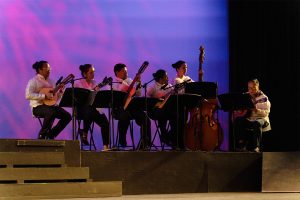
Not only are students participating in dancing, they’re producing the show’s live music as well. The rondalla, the musical ensemble, plays traditional Filipino string and percussion instruments and they are present every single practice.
Juliet Ann Sangalang, music director, joined PASACAT in 2010. Sangalang has gone from being the youngest rondalla member at 14 to its conductor 16 years later.
“My favorite part is the community and being able to share the space with like-minded Filipinos who feel inspired to get to know who they are at their core,” she said.
Behind theatrical excellence are the demands of San Diego. This summer, Mayor Todd Gloria reduced arts funding by $11.8 million. Several grants were eliminated from the city’s budget, grants that PASACAT is dependent on.
 Not only is a performing arts company fighting for their right to funding but a marginalized community for their right to exist.
Karla Divinagracia, president of PASACAT, got into contact with the San Diego Padres and the Jason Mraz Foundation to perform. They were awarded grants in return.
“But it still doesn’t cover the amount of funding that we need to actually produce what we need,” she added.
Divinagracia joined PASACAT in 1993. As an Alumni, she now passes the torch to her three daughters who she performs with in Balik-Tanaw. It is now more important than ever that these spaces meant for reclaiming identity are sustained for the next generation.
It’s performances like Extravaganza that help support these efforts to keep preserving the culture.
“Know your roots. Share your art. Preserve your culture,” Sangalang proudly declares.


