


Efren Barreto / The SWC Sun
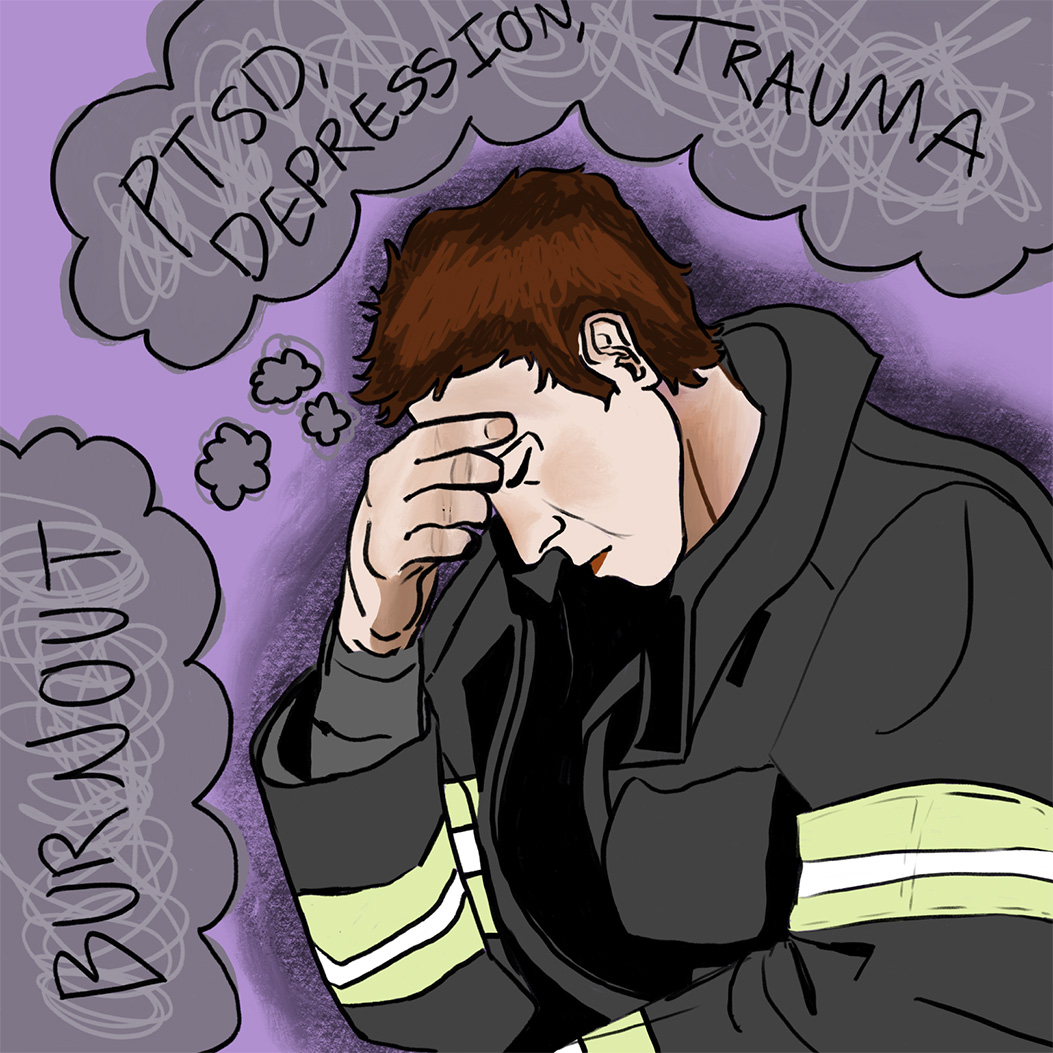
Firefighters carry up to 100 pounds of equipment when responding to emergencies. And while they can easily remove that equipment once the emergency is over, many firefighters carry the emotional trauma of dealing with life-and-death situations throughout their lives.
Lorraine Hutchinson served as the fire chief for the San Diego Fire Department for 25 years. She’s been the director for the Southwestern College Fire and Science Program since 2019 Hutchinson still remembers a call with a couple who had just left their wedding venue and got into a car accident that resulted in both of their deaths.
“I don’t know why that call upset me,” she said. “I wasn’t sleeping, I was drinking and I didn’t want to be around friends. I went on a call to the same place, I couldn’t even tell you the details. Every time I was on that bridge I would get an upset stomach that was the catalyst for me”
Firefighters deal with exposure from suicides, fires, murder, car accidents and more. Not every single person is going to leave the career with trauma. Some may and others won’t, everyone handles their own experiences differently, according to experts.
Stephanie Hall, adjunct psychology professor at SWC, said people process trauma in all sorts of ways.
“Trauma is stuck in the brain,” she said. “It’s the brain repeating over and over again but the brain can be retrained through treatment. It’s not the same for everybody, what somebody experiences might be traumatizing for one person, and it may not be traumatizing for the other person.”
IF YOU OR A FIREFIGHTER YOU KNOW NEEDS SUPPORT:
International Association of Firefighters / Behavioral Health
California Fire Chiefs Association / First Responder Health and Wellness
Focus Psychological Services / Chula Vista Fire Department
Hutchinson believes it’s important that students learn healthy coping mechanisms so they’re prepared to navigate mental health damages.
“This is a rewarding job but you are going to see things that are going to make you feel a certain way,” she said. “Explaining this to firefighters will help before the crisis hits. Nothing is going to stop you from having to go to the call but it’s how you deal with the call afterwards.”
Oftentimes when you are struggling you might not even be self-aware. It’s important to acknowledge and be aware of what the red flags are, Hutchinson added
Hall goes into details about what are early signs to notice that there is some type of trauma.
“ Early signs are how that individual is being affected by the experience,” she said. “This can look like re-experiencing the event through nightmares, flashbacks and more.”
But , how do you prepare for trauma before it even hits you ?
That’s something Thomas Hoffman worked on throughout his 27-year career as a firefighter in Ventura County.
“ I didn’t let myself become part of the job,” he said. “I did my job , making sure I was trained and ready to handle anything that came my way.” “ I slept well at night knowing that I did everything I could. I did everything I could to provide the best outcome and it just didn’t work out.”
Receiving help through therapy is a great step towards the healing process of overcoming the trauma, Hoffman noted.
Hall said exposure therapy helped her process extreme situations.
“ They retell the trauma repeatedly and this is why it’s called exposure trauma, she said. “Every time they come to a session they retell the trauma, ” “ This is done to decrease the reaction in the body.”
As the director of Southwestern College’s Fire and Science Program, Hutchinson is proud of the fact that aspiring firefighters are being taught how to process the emotional toll of being a first responder. She believes mental health is just as vital to physical health, and firefighters need to prioritize both equally.
“ Stay fit , eat good , rely on peer support , talk to friends , family and clergy,” she said. “We’re quick to take them to the hospital if they break a bone , we need to be just as quick when they have a bad call and need help. The fire service needs to take a step forward in educating firefighters to keep them safe.”


