


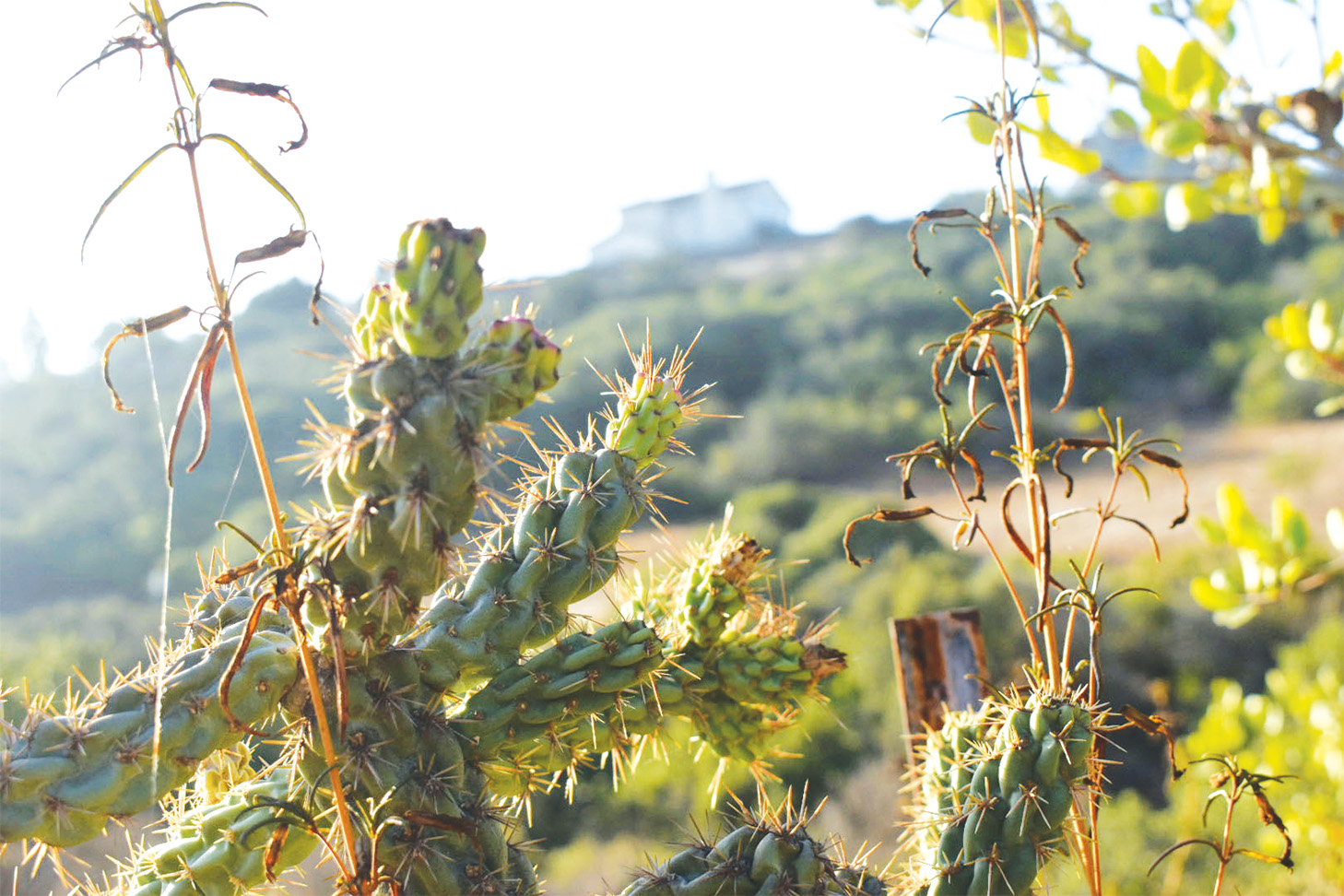
Photo By Amanda Cortes / The SWC Sun
By Amanda Cortes
About a mile from Southwestern College, Rice Canyon sits behind Rancho Del Rey Parkway. For wildlife, the canyon is a pocket of refuge from the ever-flowing traffic of East H Street and the dense development surrounding it. The influence of the surrounding city encroaches into the canyon, from graffiti marked trail signs, crushed plastic bottles and scattered cigarette butts along the sediment. Even non-native plants have found their way into the canyon.
“Rice Canyon is not the way it looked 100 years ago or 200 years ago, because of the introduction of non-natives,” said Jon Rebman, curator of botany at the San Diego Natural History Museum.
Rebman oversees a more than 150-year-old collection that allows scientists to compare today’s landscape with the region’s historical plant life. In an environment so prone to change like Rice Canyon, Rebman explains how difficult it can be to recognize environmental change simply by looking at what is growing there today.
The effort to track San Diego’s urban canyons goes back decades. In the late 1980s, conservation biologist Michael Soulé and his students began surveying wildlife in San Diego’s urban canyons, studying whether the isolated habitats functioned like islands surrounded by development. Now, researchers at the museum are returning to some of those canyon systems to see what has changed. But making a direct comparison is not always possible. Some of the canyons have since been developed, changed ownership or became inaccessible to researchers.
“What we’ve noticed is there has been quite a bit of change since these things were last surveyed,” said Rachel N. Larson, a conservation biology researcher.
Larson studies urban wildlife through camera traps as part of the museum’s Healthy Canyons Initiative. The project—the result of a three year grant of nearly $800,000 from The Gordon and Betty Moore Foundation—brings together researchers studying mammals, birds, reptiles, amphibians, insects and plants to understand how increasing urbanization is affecting biodiversity in San Diego’s canyon systems.
“In some cases, we’ve had certain species, like some of our birds and small mammals that were not present during the ‘90s surveys, big eared woodrats or some of the shrub breeding birds and some of the gnatcatchers, have actually come back to the canyons,” Larson said.
While some species have returned, others have disappeared. Some species appear less able to persist as isolated canyon habitats become increasingly surrounded by development. Roads can separate populations, while the loss of native vegetation can reduce the habitat available to species that depend on it.
“Some of our species like California quail, roadrunners are disappearing from canyons where there were 30 years ago and now are gone because those populations can’t sustain themselves in that small area,” Larson said.
According to Larson, the effects of development extend beyond the loss of habitat. Roads and buildings change the conditions around the remaining patches of habitat, including their exposure to heat, artificial light and noise.
“There’s noise pollution, and cities are often the places that invasive species get introduced to environments,” Larson said. “So, in addition to the structural changes on the landscape of introducing buildings roads and those sorts of things, there’s also other changes to nutrient cycling lighting and noise pollution that also come along with urbanization.”
How Climate Change Impacts Canyons
Those pressures are unfolding alongside changes in San Diego’s climate. For researchers, the two sets of pressures can be difficult to separate. Ecologist Dawn Lawson said climate projections suggest the county could receive roughly the same amount of precipitation each year, but in fewer and more intense periods. Lawson warns of the false sense of security these competing factors can cause; during those deluges of rain, water can run quickly across the ground rather than soaking into the soil, leaving less moisture available to plants through the dry season.
Temperature records tell a similar story. Lawson pointed to long term data from San Diego’s Lindbergh Field showing increases in both average and minimum temperatures over the decades. Warmer nights can be especially consequential during heat waves, giving ecosystems less time to recover from daytime heat.
“When we have these big heat waves that don’t cool down at night, it’s very bad for people, and it’s also problematic for wildlife,” Lawson said. But we often don’t have the data to tell. With people, we get them into the hospital, we know it causes heart problems, and with wildlife, we don’t know so much but it’s probably causing big problems as well.”
Heat is only one of the pressures wildlife face in San Diego’s canyons. For species moving between increasingly isolated patches of habitat, the roads and development surrounding those canyons can create another challenge.
“There’s not a lot of connectivity between the canyons,” said Anna Arft, a conservation biology research project manager at The Natural History Museum. “Even Rice Canyon, on both sides of it, there’s roads, so that can be a barrier for different species. Large mammals can potentially walk across the road, however, then there’s also the problem of getting hit by a car.”
Arft helps lead the Healthy Canyons Initiative, which includes bringing community members into the process of developing restoration plans for individual canyon and dune sites. These subplanning groups are part of the project’s goal to use scientific research alongside local knowledge in guiding conservation.
“We’re bringing in community members to form these subplan writing groups that are putting together restoration plans, like a small area within the canyon or dune site, like five acres, where we get community input. We have scientists that are contributing, and this is a work in progress,” Arft said.


