


Courtesy San Diego History Center
By Zamara Robles
Beautifully diverse San Diego County has an ugly secret.
In a city with a Latino name that was built by Chinese and African Americans, people of color were prevented from buying homes or businesses in certain communities. Jewish people, too.
“Redlining” was practiced from the Civil War and into the 1970s and it shaped the segregated communities we still see in San Diego today. Southeast is Black. The College Area is Jewish. National City and West Chula Vista is Latino.
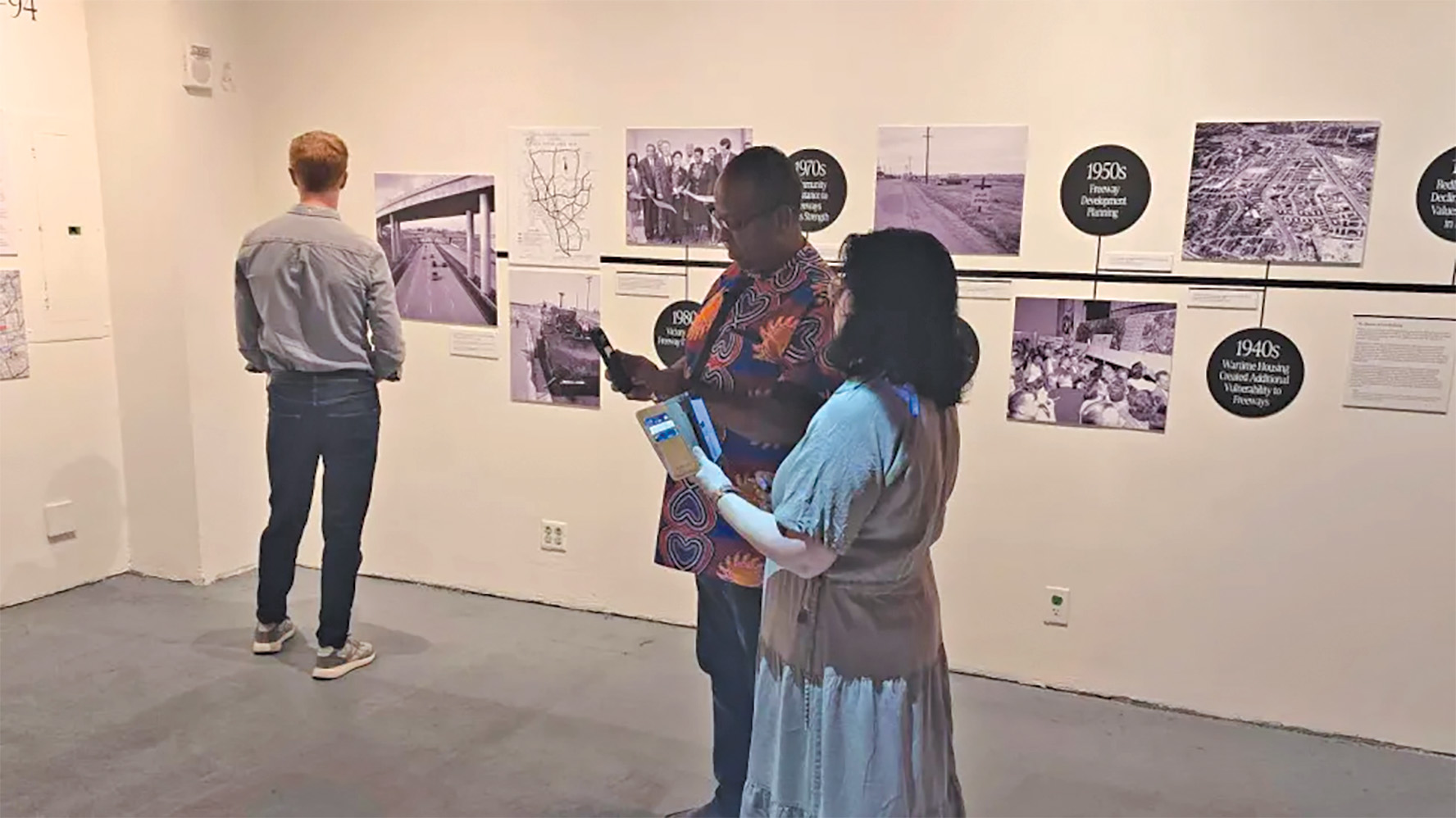
A provocative exhibit by the San Diego African American Museum of Fine Arts and the San Diego History Center showed how the real estate industry, banks and business organizations drew red lines around certain neighborhoods to socially engineer its residents. It went both directions, creating rich White neighborhoods and poorer brown ones. Redlined neighborhoods also included La Jolla, Gaslamp Quarter in downtown San Diego, Imperial Avenue, Euclid Avenue and Logan Heights.
Exhibit visitor Mary Fifield said she is still affected by redlining and the Interstate Highway System which carved gaps through once-thriving neighborhoods.
“Freeway development has divided minority communities and created barriers,” she said. “Real barriers. Understanding how the city has evolved and the different kinds of people who have lived here is important. This exhibit is so rich and informative.”
Black citizens of San Diego County gave so much to shape the creation of our region but have received so little credit. Today’s Gaslamp Quarter was once known as the “Harlem of the West.” The Coleman Mining District is now Julian (named for a Black former slave.)
Exhibit walls are full of photos of distinguished people of color who ran the county at its creation who were stripped from their homes, jobs, businesses – and history. In the 1980s when people of good will tried to honor Black Americans by renaming Market Street for Martin Luther King, Jr. as backlash at the ballot box forced the city to change it back.
The exhibit is a chilling testament to San Diego’s erasure of minority identity. San Diego History Center Vice President Tina Zarpour said the project was developed through a partnership between the San Diego History Center, Museum without Walls and the San Diego African American Fine Art Museum. UCSD History and Urban Studies students did much of the heavy research and collection of artifacts, she said.
Zarpour said she hoped the exhibit is an eye opener.
“We focus on eight neighborhoods in San Diego through time,” she said. “They are Chollas View, South Crest, City Heights, Julian, La Jolla, Gaslamp and Imperial Avenue. These communities have undergone significant physical change and a shift in the population. We tell the story of displacement through things like redlining, restrictive covenants, freeway development, unequal development, and, of course, racism and the “burying” and obfuscation of historical truths.”
Zarpour said the exhibit is meaningful in many ways.
“It’s important to see our shared landscape and understand what has happened to it over time,” she said. “San Diegans have responded positively to this exhibition. We have had people share stories of their own community’s displacement. Classrooms of students are interested in learning about this topic because it has had an impact on the neighborhoods they are familiar with and travel through to this day.”
Today gentrification is stripping people of color of their homes, businesses and leadership by pricing them out. San Diego has been buffeted by change for 120 years, Zarpour said.
The exhibit runs through May 31 at the San Diego History Center in Balboa Park.


